The Flannan Isles Lighthouse Keepers — Disappearance Profile
PRN Disappearances — Factual Case Reference
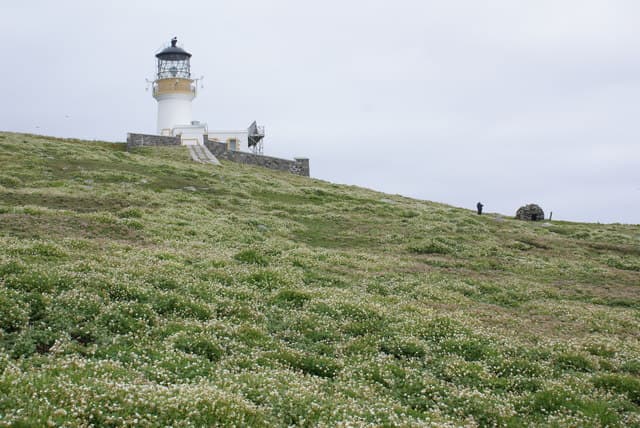
- Missing people
- James Ducat, Thomas Marshall and Donald McArthur
- Likely disappearance
- 15 December 1900
- Location
- Flannan Isles Lighthouse, Eilean Mòr, Outer Hebrides, Scotland
- Official conclusion
- Probably drowned after being overwhelmed by an exceptional sea near the west landing
- Status
- PRESUMED DEAD — no bodies recovered
Lighthouse keepers James Ducat, Thomas Marshall and Donald McArthur disappeared from Eilean Mòr in December 1900. The station was found deserted on 26 December. Severe sea damage near the west landing led the Northern Lighthouse Board superintendent to conclude that the men were probably overwhelmed by an exceptional sea. The event was not witnessed and no bodies were recovered.
What is documented
In December 1900, lighthouse keepers James Ducat, Thomas Marshall and Donald McArthur disappeared from the Flannan Isles Lighthouse on Eilean Mòr in the Outer Hebrides.
The station was found deserted when the lighthouse tender Hesperus arrived on 26 December. The lamps had been prepared, the machinery cleaned and the kitchen left tidy. Two sets of outdoor clothing were missing, but no trace of the men was found.
The lighthouse had only been operating for about a year. Personnel and supplies moved between the station and two exposed landing areas using paths, steps, rails, cranes and rope-handling equipment. The west landing became central to the official inquiry because investigators found severe damage there.
The three keepers
James Ducat was the Principal Lightkeeper. National Records of Scotland records that he entered lighthouse service in 1878 and was promoted to Principal Lightkeeper in 1896. Thomas Marshall was an Assistant Lightkeeper and a former seaman. Donald McArthur was serving as Occasional Keeper while Assistant Lightkeeper William Ross was absent through illness.
Controlled chronology
A passing steamship reported that the light was not operating on 15 December. The station log contained entries to 13 December, while notes for 14 December and observations from 15 December had been written on a slate for later transfer. The condition of the station indicated that normal morning work had been completed on 15 December, but no exact time of disappearance is known.
Adverse weather delayed the relief voyage. On 26 December the Hesperus reached Eilean Mòr. There was no response to its horn or signal rocket. Relief keeper Joseph Moore went ashore and found the station empty. Moore and volunteers kept the light operating and searched the island.
Superintendent Robert Muirhead inspected the station and submitted his report on 8 January 1901.
Physical evidence
Muirhead described extensive damage near the west landing: displaced and twisted iron railings, damage around the crane platform and tramway route, a large stone moved onto the concrete path, a life buoy torn from its fastenings and evidence of destructive sea action at a height of roughly 110 feet above sea level.
The damage strongly supports exceptionally powerful water reaching the landing infrastructure. It does not independently prove where each keeper was standing.
Muirhead recorded that Ducat was believed to be wearing sea boots and waterproof clothing and Marshall sea boots and oilskins. Moore explained that keepers normally wore these items when travelling to the landings. McArthur was believed to have left the station later and more hurriedly, possibly in response to an emergency. This sequence was reconstructed after the event and was not witnessed.
Official explanation
Muirhead concluded that the most likely explanation was that the keepers went towards the west landing and were swept into the sea by an unexpectedly large wave or body of water. This remains the strongest explanation because it matches the concentration and scale of sea damage, fits the missing outdoor clothing and was reached after direct inspection by the responsible superintendent.
It does not establish why the men went outside, whether all three reached the landing together, whether a rescue was attempted, the precise time or wave mechanism, or why no body or personal item was recovered. PRN therefore presents probable drowning as the best-supported reconstruction, not a conclusive solution.
What remains unexplained
All three trained keepers disappeared, nobody witnessed their final movements and no bodies were recovered. The sequence involving the third keeper is inferred, while the reporting delay removed any opportunity for immediate rescue or scene preservation.
Myth versus record
The archive account does not support a warm meal left on the table. The kitchen was reported tidy. An overturned chair is not established by the discovery material currently preserved. No authenticated keeper log contains the dramatic internet quotations about terrified men crying or praying.
Claims that calm weather made a sea accident impossible are misleading: the relief voyage was delayed by adverse weather and investigators documented severe sea damage. Claims of interpersonal violence are unsupported by verified evidence of a fight, weapon or blood. Curse and supernatural claims belong to later folklore, not the evidential record.
Competing explanations
An exceptional sea or wave accident is the strongest and officially supported explanation. A keeper being lost followed by an attempted rescue is a plausible variation but is not directly evidenced. A fall is physically possible but less consistent with the disappearance of all three men and the concentrated sea damage. Interpersonal violence, abduction, voluntary departure and supernatural intervention are unsupported.
Cultural legacy
Wilfrid Wilson Gibson's 1912 poem helped make the disappearance internationally famous and contributed dramatic domestic imagery later retellings sometimes presented as historical fact. Cultural retellings must remain separate from the 1900 investigation.
Why the alarm was delayed
The lighthouse had no radio link with Lewis. A shore observer watched for signals, and a passing steamer reported that the light had not been seen on 15 December; that report reached the Northern Lighthouse Board on 18 December. Adverse weather then prevented the relief vessel from landing until 26 December. The delay explains why the absence was not discovered immediately, but it does not establish when the keepers disappeared.
Location & map
Flannan Isles Lighthouse, Eilean Mòr, Outer Hebrides, Scotland
Pin position: Flannan Isles Lighthouse on Eilean Mòr. The west landing was central to the official accident theory, but the men's exact point of disappearance is unknown.
Visual evidence & context
Lighthouse and western-landing railway route
Contextual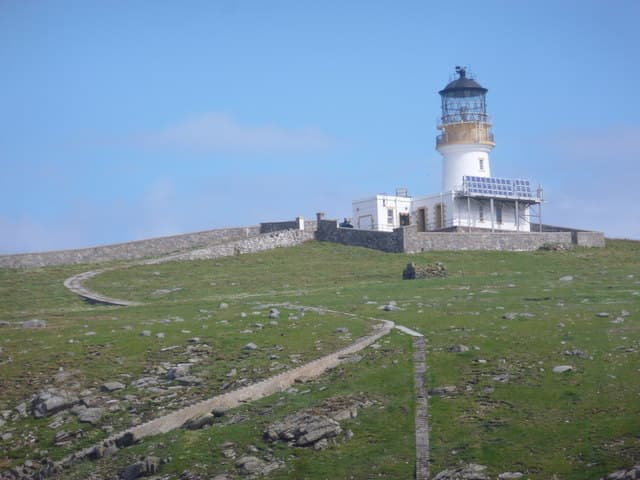
Modern contextual photograph showing the lighthouse, cliffs and concrete housing for the railway tracks towards the western landing. It does not reconstruct the keepers' final movements.
Memorial plaque for the three lighthouse keepers
Contextual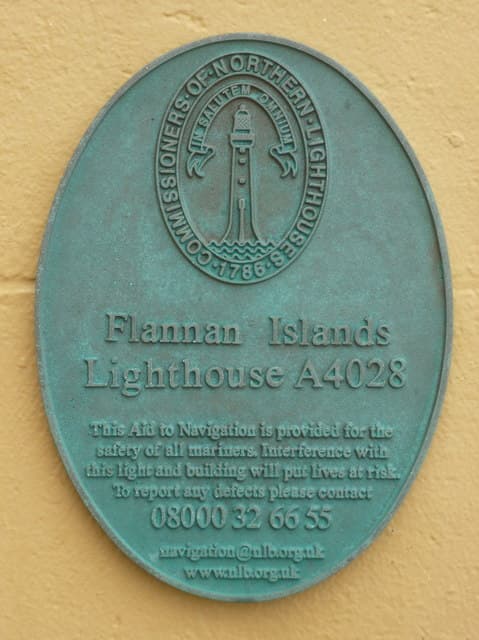
Memorial plaque at Flannan Isles Lighthouse commemorating James Ducat, Thomas Marshall and Donald McArthur, who disappeared in December 1900.
Sources
Trusted — direct official and institutional
- Northern Lighthouse Board — Flannan Islands lighthouse.
- National Records of Scotland catalogue — NLC3/1/1, Correspondence and Reports.
- National Records of Scotland — Flannan Isles Lighthouse Keepers: The disappearance, an institutional account drawing on inquiry correspondence, keeper registers and death records.
Contextual
Established maritime, lighthouse and local-history sources checked against the institutional record.
Excluded as evidence
Fictional log entries, poetry used as scene evidence, mystery-site retellings, entertainment reconstructions and unsupported paranormal claims.