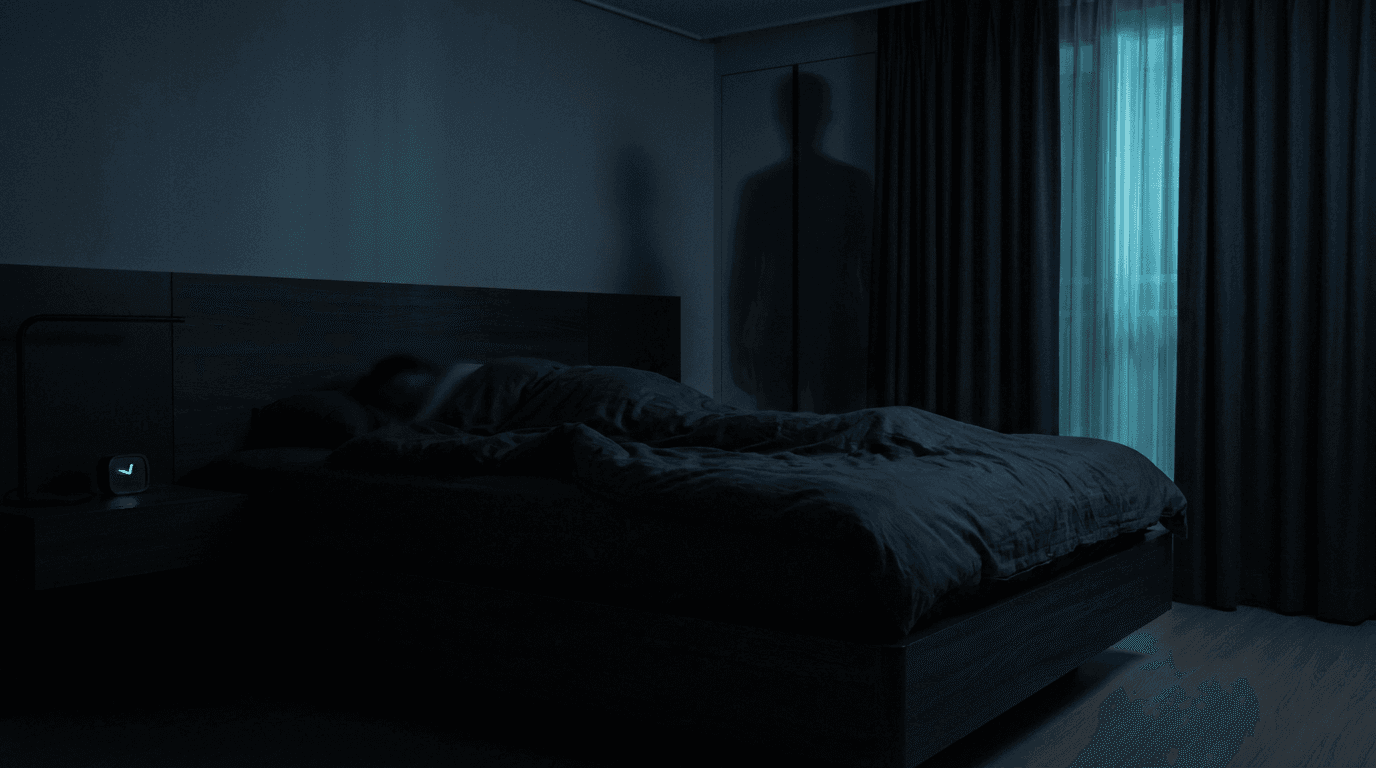
Sleep paralysis and the bedroom intruder
Waking unable to move, with a dark presence in the room and pressure on your chest, is one of the most frightening experiences a person can have. It also has a well-understood neurological explanation — and it affects roughly one in five people.
Across cultures and centuries the experience has had different names: the Old Hag in Newfoundland, the incubus in European folklore, kanashibari in Japan. In modern paranormal accounts it often appears as a shadow figure by the bed or a weight pressing on the chest. The neuroscience behind all of these is the same.
What sleep paralysis is
During REM sleep the brain paralyses the body's voluntary muscles to stop sleepers acting out dreams. In sleep paralysis a person becomes conscious while this paralysis is still active: awake, aware, and unable to move or speak. Episodes last seconds to a few minutes and are physiologically harmless. Lifetime prevalence estimates range from 20% to 60%. It is not a sign of illness.
The intruder and the incubus
Peer-reviewed research describes a two-factor model. The "intruder" factor involves a hypervigilant threat-detection system producing a powerful sense of a threatening presence, sometimes with auditory or visual hallucinations. The "incubus" factor involves pressure on the chest and difficulty breathing, caused by compromised respiratory control during the paralytic state. The combination — a felt presence and chest pressure — maps precisely onto centuries of supernatural night-visitation accounts, which is why the same biological event has been independently interpreted as demonic assault, ancestral visitation, or paranormal encounter across separate cultures.
Triggers and what to do
Sleep paralysis is more likely with sleep deprivation, irregular schedules, sleeping on your back, high stress, and shift work or jet lag. If episodes cause significant distress or happen frequently, a GP can help — but improving sleep hygiene usually reduces their frequency. If you have experienced what felt like a paranormal encounter in the night, PRN's Is It Paranormal? page covers sleep-related experiences first. This is not about dismissing what happened — it is about understanding what kind of experience it was.
Sources: NHS — Sleep paralysis; PMC/NIH — "The neuropharmacology of sleep paralysis hallucinations," PMC6208952; Sleep Foundation — Hypnopompic hallucinations.