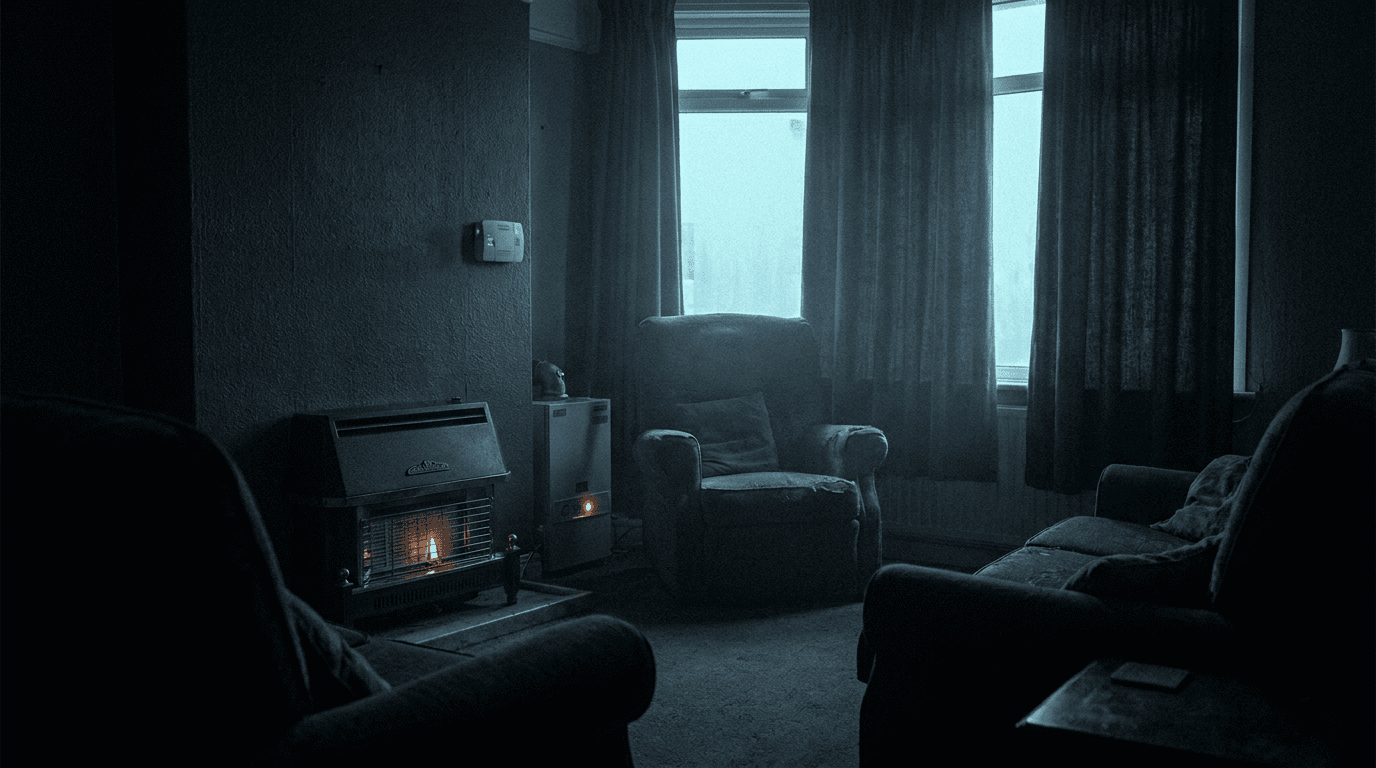
Carbon monoxide and the haunted house
A family plagued by visions, voices, and overwhelming dread in their own home. The symptoms stopped when a faulty furnace was repaired. A 1921 medical case that every investigator should know — and a safety point that cannot be buried.
In 1921, Dr William Wilmer published a case study in the American Journal of Ophthalmology that reads, at first, like a ghost story. A family reported a sense of someone in the house, sounds of furniture moving in empty rooms, visual apparitions, collective illness, and overwhelming dread. The cause was not paranormal: the furnace was leaking carbon monoxide. Once it was repaired, every symptom stopped.
Why carbon monoxide produces these effects
Carbon monoxide is an odourless, colourless gas produced by incomplete burning of fuel. Its danger lies in its invisibility — it cannot be seen, smelled, or tasted. Inhaled, it binds to haemoglobin far more effectively than oxygen, reducing the blood's capacity to carry oxygen to the brain. At sub-lethal levels it causes headache, dizziness, fatigue, and confusion; at higher levels, visual and auditory hallucinations, acute dread, and disorientation — a cluster that maps almost exactly onto the classic "haunted house" experience. Symptoms often worsen in a particular room and improve when the person leaves, reinforcing the impression that something is wrong with the space itself.
A safety priority, not just a research note
PRN treats the carbon monoxide check as a non-negotiable safety step before investigating any reportedly haunted building. More than 400 Americans die from unintentional CO poisoning each year (CDC), and over 100,000 need emergency treatment. CO alarms should be fitted in every room with a fuel-burning appliance, and boilers serviced annually by a Gas Safe registered engineer in the UK. If you have headaches, dizziness, nausea, or confusion that improve when you leave a building: go outside, call NHS 111 (or 999 if severe), and contact the National Gas Emergency Helpline on 0800 111 999 before re-entering. This check must come first — getting it wrong has consequences well beyond an investigation.
Sources: Wilmer, W. H. (1921), "Effects of Carbon Monoxid upon the Eye," American Journal of Ophthalmology, 4(2); NHS — Carbon monoxide poisoning; CDC — Carbon Monoxide Poisoning Basics.