External seller information. PRN does not sell this product and does not imply endorsement.
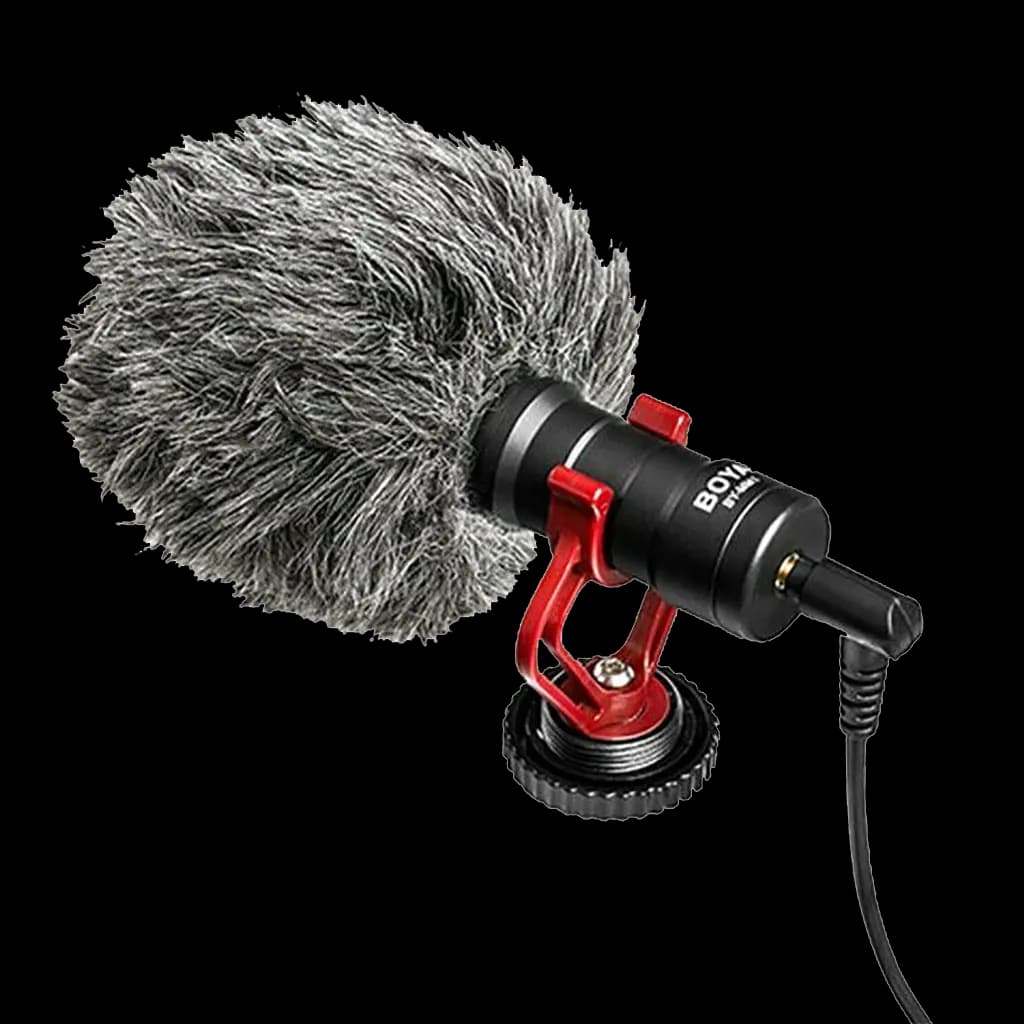
Wind-resistant external microphone for outdoor investigation audio capture via 3.5mm jack
External seller
Seller & availability
External seller information. PRN does not sell this product and does not imply endorsement.
This product is sold by an external seller. PRN hosts directory information only and does not process purchases.
Field reference
Potential Field-Use Benefits
A directional microphone with wind resistance, useful for cleaner audio when recording outdoors or in draughty buildings. Improved audio supports honest review but does not validate captured sound by itself.
PRN has not tested or reviewed this product. This information is provided for reference only.
Technical
Specifications
SNR
76dB SPL
Size
81 x 22 mm
Brand
BOYA
Model
BY-MM1
Weight
50g
Connector
3.5mm TRS & TRRS
Transducer
Electret Condenser
Sensitivity
-42dB +/-1dB
Polar Pattern
Cardioid
Frequency Response
35-18kHz +/-3dB
Understanding the tech
How it works
Accessories are supporting equipment, not detectors. Broadly they fall into:
Audio aids — external microphones (including wind-resistant designs) capture cleaner sound for a recorder; noise-control units reduce unwanted input; ghost-box / spirit-box speakers make those devices' output louder or clearer in the field.
Illumination — infrared (IR) illuminators, torches and night-vision lights emit near-infrared light that IR-sensitive and full-spectrum cameras can "see" in the dark, while staying invisible to the eye; LED headlamps provide hands-free white light.
Power and logistics — USB power banks keep devices running; walkie-talkies coordinate the team; filming rigs mount a phone with light and mic.
None of these instruments measures an environmental quantity, so none can "detect" anything on its own. Their relevance to an investigation is reliability and signal quality.
Use with care
Limitations
Accessories cannot detect — an external mic captures sound but does not interpret it; an IR light reveals what a camera can see but adds nothing evidential by itself.
Some accessories actively create artefacts in other devices. An IR illuminator lights up airborne dust, insects and moisture, which then appear as "orbs" or streaks on the camera it is paired with. A speaker amplifying a spirit box amplifies its radio noise too.
Radios add EMF/RF. Walkie-talkies and any powered accessory emit fields that can move a nearby EMF meter or contaminate an audio recording.
Quality varies — cheap mics add hiss, cheap lights flicker, power banks can introduce electrical noise.
Read the data critically
Common false positives
These false readings are caused in the paired devices an accessory supports:
IR-light "orbs" — dust, pollen, insects and moisture lit by an IR illuminator close to a camera lens.
EMF/RF contamination from walkie-talkies, power banks and other powered accessories near a meter or recorder.
Added audio noise — hiss, handling noise or speaker feedback introduced by a mic, rig or speaker.
Lens flare and reflections from torches and headlamps.
Best practice: keep IR illuminators off-axis and away from the lens to limit orbs, keep radios and power banks clear of meters and mics, and remember that an accessory's job is to make the primary instrument more reliable — it never supplies evidence on its own.
PRN has not tested or reviewed this product. This guidance describes the device class and is provided for reference only.
Paranormal Response Network is not a seller, reseller, certifier, or safety authority for any equipment shown here. Listings may include vendor-submitted, sponsored, affiliate-linked, imported, or externally sourced information. Presence in this directory does not mean PRN has tested, endorsed, or approved any product or vendor.