External seller information. PRN does not sell this product and does not imply endorsement.
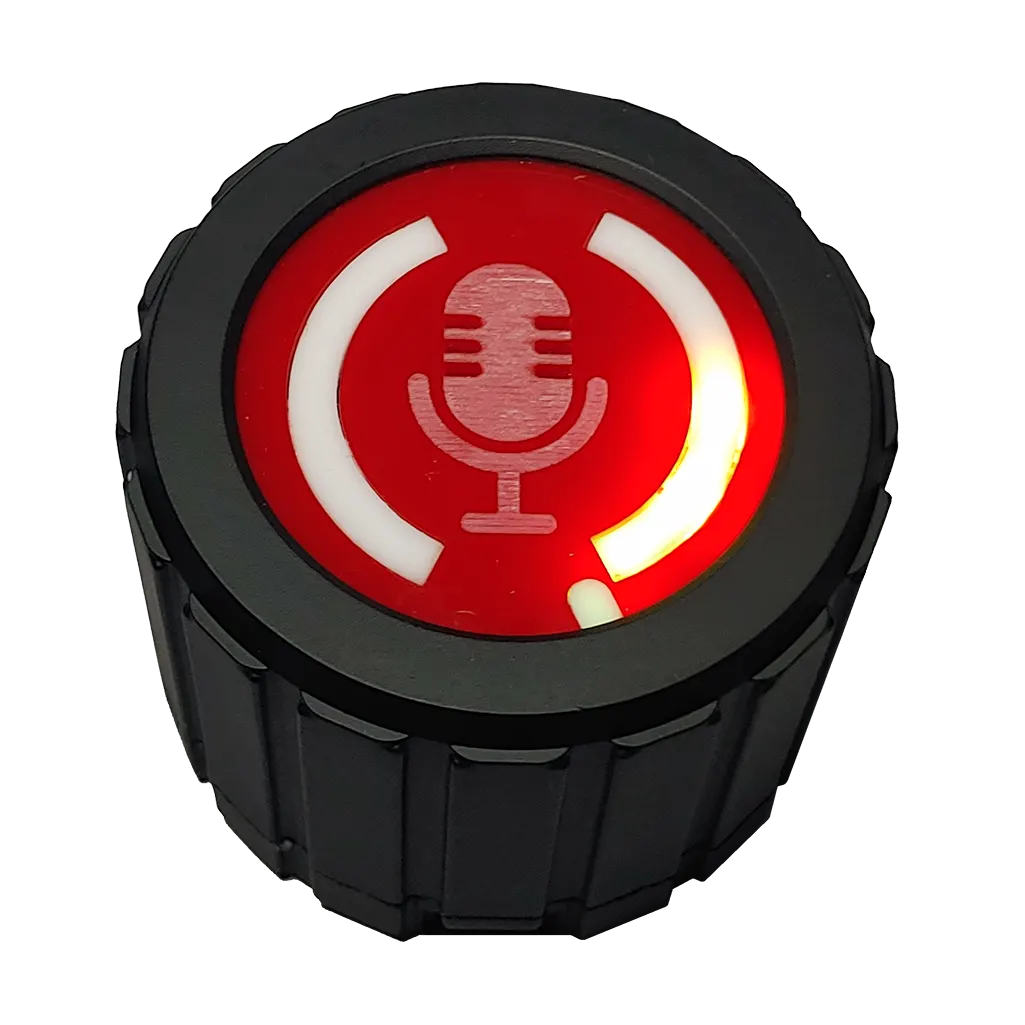
Sound level spike detection device for monitoring acoustic anomalies and capturing EVP trigger moments
External seller
Seller & availability
External seller information. PRN does not sell this product and does not imply endorsement.
This product is sold by an external seller. PRN hosts directory information only and does not process purchases.
Field reference
Potential Field-Use Benefits
A sound-level sensor that flags sudden audio spikes with a light, useful for drawing attention to noises during a quiet watch. It responds to any sound, so ordinary building and human noise should be ruled out first.
PRN has not tested or reviewed this product. This information is provided for reference only.
Technical
Specifications
Width
2 inches
Sensor
High-sensitivity microphone
Battery
Built-in rechargeable
Display
Colour-coded light ring (green to red)
Material
3D-printed
Sensitivity
Adjustable knob
Spike Indicator
Illuminated 30 seconds
Understanding the tech
How it works
A digital voice recorder converts air-pressure variations at the microphone into an electrical signal, samples it, and stores it as a digital audio file. In paranormal use these recorders are run to capture Electronic Voice Phenomena (EVP) — short, speech-like sounds (typically one to three syllables, often whispered and low in volume) found on a recording when no speaker was consciously heard at the time. Because EVP are usually quiet relative to background noise, they are normally surfaced afterwards by raising the gain or filtering the file.
Related instruments in this category work on the same audio signal in different ways: an amplified EVP microphone boosts very low-level sound before it reaches the recorder; an EVP spike / sound meter triggers a light or reading when sound level crosses a threshold; and an ultrasound monitoring device (Para4ce UMD) shifts frequencies above human hearing down into the audible band so they can be heard or logged.
PRN treats a recording as a record of sound, not of speech. Deciding that a captured fragment is a word is an interpretive act and is where most error enters.
Use with care
Limitations
To record EVP at all, there must be noise in the audio circuit — and raising gain to find faint sounds also raises that noise floor, so artefacts and genuine quiet sounds are amplified together.
Recorders are susceptible to radio-frequency interference (RFI). Inadequately shielded devices can pick up broadcast transmissions or stray electromagnetic signals, which is why serious EVP work is sometimes done in RF- and sound-screened rooms.
Auditory pareidolia is the dominant risk. The brain readily imposes familiar words onto ambiguous sound, especially when primed with an expectation ("say your name"). A fragment that "clearly" says something to a listener who knows the prompt may carry no such content.
Built-in mics capture handling and body noise — fabric rustle, footsteps, breathing, stomach noise, distant traffic and HVAC — all of which can resemble whispers once amplified.
Spike/sound meters do not identify a source. They register that a sound was loud enough, not what made it.
Read the data critically
Common false positives
Stray radio / broadcast pickup through poor shielding (RFI).
Investigator-generated sound — whispers, breathing, clothing, equipment handling, footsteps.
Building and environmental noise — pipes, HVAC, wind, settling timber, insects, traffic.
Amplification artefacts — compression, clipping and noise-floor hiss introduced when gain is raised to recover a faint sound.
Pareidolia at review — assigning words to noise, especially when the reviewer expects a particular answer.
Best practice: log every audible sound at the time ("tagging"), use the same file for everyone's review, avoid telling reviewers what a clip is "supposed" to say, prefer recorders with good RF shielding, and keep a noise baseline of the room. A captured sound is evidence of a sound; it is not, by itself, evidence of a voice.
PRN has not tested or reviewed this product. This guidance describes the device class and is provided for reference only.
Paranormal Response Network is not a seller, reseller, certifier, or safety authority for any equipment shown here. Listings may include vendor-submitted, sponsored, affiliate-linked, imported, or externally sourced information. Presence in this directory does not mean PRN has tested, endorsed, or approved any product or vendor.